US President Donald Trump’s plan to grant Nvidia licences to ship more powerful artificial intelligence chips to China is triggering fresh backlash in Congress, including from prominent China hawks within his own party.
The move is sharpening divisions in Washington over whether tighter export controls protect national security or weaken US influence in the global AI race.
The dispute is now moving beyond political criticism and into legislative action.
Lawmakers have advanced a new proposal that would give Congress a direct role in approving or blocking future chip export licences.
AI Overwatch Act tightens export oversight
The pushback intensified this week after the US House of Representatives Foreign Affairs Committee advanced a bill seeking to expand congressional oversight of advanced AI chip exports.
The proposal, known as the AI Overwatch Act, was introduced last month by Rep. Brian Mast, R-Fla., the committee chairman.
If passed, it would require both the House Foreign Affairs Committee and the Senate Banking Committee to approve shipment licences for advanced chips within 30 days.
This would give lawmakers the power to block chip export licences through a joint resolution, adding a stronger layer of review over decisions typically handled by the administration.
Nvidia H200 exports raise security fears
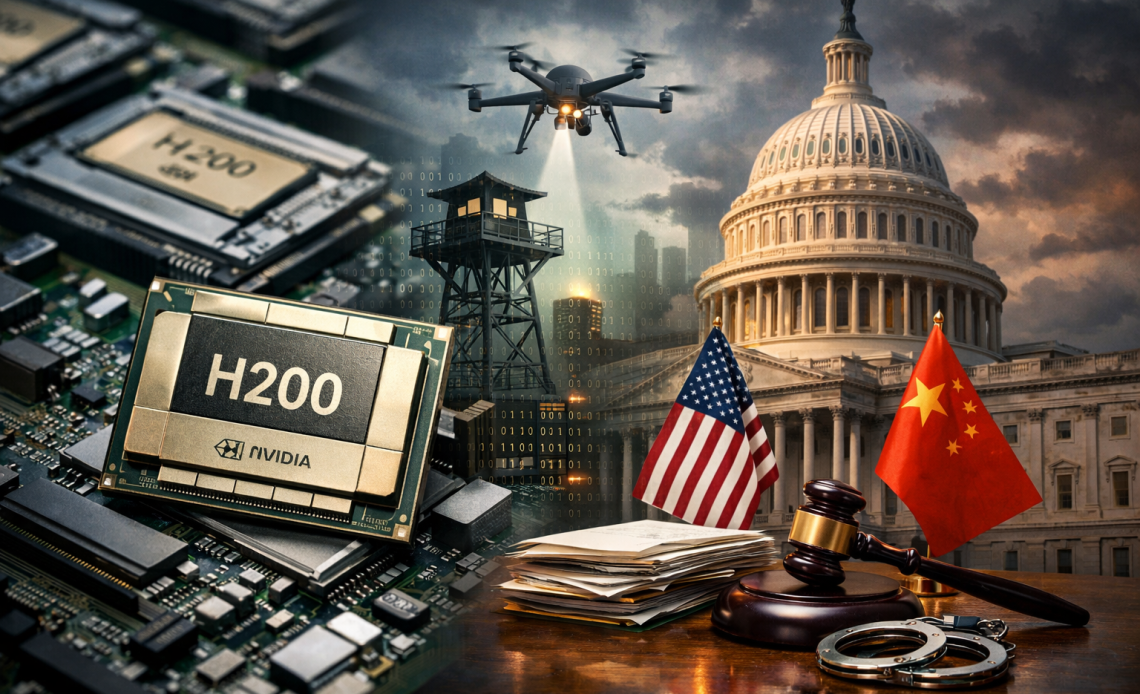
The bill comes as the Trump administration plans to grant licences allowing Nvidia to sell its H200 chips to China, which are far more powerful than the processors previously permitted for export.
Current US chip controls require individual licences from the Commerce Department for any exports or transfers of high-performance AI chips to entities in “countries of concern”, including China, Cuba, Iran, North Korea, and Russia.
These controls have covered Nvidia’s H200, one of its most powerful AI chips.
Still, Trump confirmed last week that his administration would approve sales of the processors to China, provided the US receives a 25% cut of the proceeds.
If passed, the AI Overwatch Act would revoke existing licences for advanced AI chip transfers and impose a temporary ban until the administration submits a national security strategy on AI exports.
It also includes exemptions for “trusted” US companies shipping chips abroad under US control, as long as they meet security standards.
Washington splits over chip restrictions
Supporters of the bill argue that allowing more advanced Nvidia chips into China could accelerate Beijing’s AI capabilities and potentially strengthen its military and security infrastructure.
Mast framed the issue as a national security risk, claiming companies like Nvidia are requesting to sell millions of advanced AI chips to Chinese military companies such as Alibaba and Tencent.
The bill was also co-sponsored by Rep. John Moolenaar, the Republican chairman of the Select Committee on China, who described it as a critical step toward protecting America’s technological edge.
Still, it remains unclear how much support the AI Overwatch Act can attract in the House and Senate.
At the same time, administration officials backing more Nvidia shipments overseas argue the restrictions have been counterproductive.
They say US-designed chips should stay central to global AI infrastructure, which they see as essential for maintaining American technological dominance.
This aligns with arguments previously made by Nvidia CEO Jensen Huang and industry lobbyists.
Pushback grows as Trump shifts policy
Among the critics of the AI Overwatch Act is White House AI and crypto czar David Sacks, who has already taken aim at the proposal.
The Silicon Valley entrepreneur and investor recently reposted a viral social media claim suggesting the bill would undermine Trump’s authority over AI chip exports.
However, bipartisan lawmakers pushing back argue the H200 could bolster China’s AI development and be leveraged for military use.
In December, Senate Intelligence Committee Vice Chairman Mark Warner, D-Va., criticised Trump’s approval of H200 exports as evidence of a haphazard and transactional approach lacking a coherent strategy against China.
He also argued that the US must remain the undisputed leader in AI hardware because strategic competition with China will come down to which ecosystem drives adoption and innovation globally.
Senate Banking Committee ranking member Elizabeth Warren, D-Mass., has warned that China seeks such chips for military modernisation, weapons design, and AI surveillance, citing Justice Department assessments.
Trump has also faced bipartisan resistance after previously announcing he would allow Nvidia to resume sales of its H20 chip to China, despite having restricted it only months earlier.
The post Trump’s Nvidia chip exports to China trigger backlash in Congress appeared first on Invezz